The Romans invaded Britain in 43AD. They began exploiting its mineral wealth relatively quickly and they were mining lead in the Mendips (Somerset) by 49AD. A lead ingot found near Wrexham and stamped with a text recording the Emperor Nero suggests that lead was being mined in Wales by the 60s and two lead ingots found at Chester are evidence that lead mining had started in Flintshire by 74 AD. There is no direct evidence for the date of commencement of lead mining in Derbyshire but one of the named individuals on a Derbyshire ingot (a ‘pig’) of lead is also known from the Mendips and he was active there sometime between 69 and 79AD so it is likely that he was active in Derbyshire in the second half of the first century.
The Derbyshire peak district is believed to be at the southern edge of the territory of the Brigantes. Initially, the Brigantes under their leader, Cartimandua, were pro-Roman but the Brigantes expelled her and the Romans took direct control of Brigantian territory between 69 and 80 AD. The southern part of Brigantian territory was under their control in the early part of that period, so if Derbyshire followed the pattern of other lead mining districts, lead mining quickly followed the Roman occupation.
Pliny, writing around 77-79AD, said that, in Britain, lead was “found in the surface stratum of the earth in such abundance that there is a law prohibiting the production of more than a certain amount.” So, clearly lead mining was a regulated industry so there would need to be some administration and policing of the activities. The archaeological evidence for the management of the lead mining industry comes from the inscriptions on the pigs of lead. About 35% of the inscribed pigs of lead in Britain contain the abbreviation LVT. This is believed to refer to Lutudarum, a place name in the Ravenna Cosmography, which lies amongst a group of place names in Derbyshire and Cheshire. In the list it is next to Derventio, believed to be the Roman place of Little Chester in Derby. All the pigs of lead that have the abbreviation LUT are believed to originate in Derbyshire, and Lutudarum is believed to be the administrative centre of the Roman Derbyshire lead mining district.
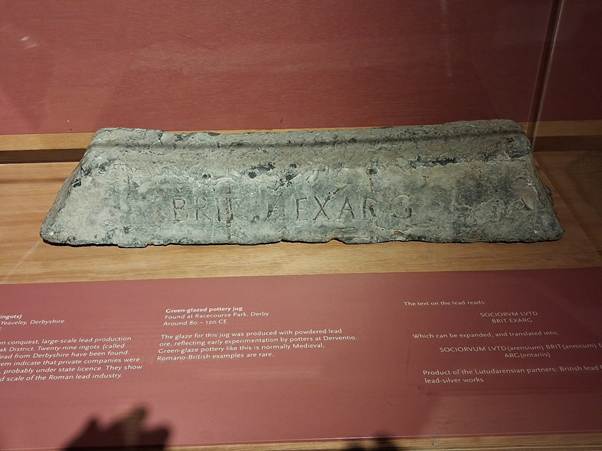
Fig 1 Roman Pig of Lead from Yeavely in Derbyshire
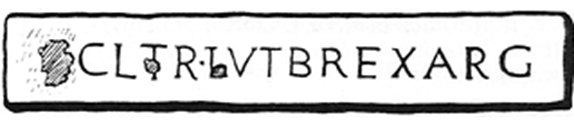
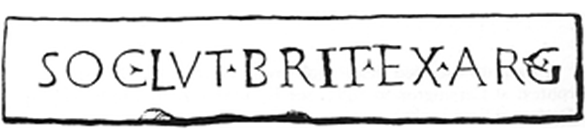
Fig 2 Inscriptions mentioning LVT (Lutudarum) from Pulborough (top) and Brough on Humber (Petuaria). The top one is believed to refer to Tiberius Claudius Triferna who was also active in the Mendips between 69 and 79. The bottom one mentions the society that had some sort of role in the industry
There are 20 pigs of lead that are known to contain the abbreviation LUT. These are listed in the attached table (Appendix 3). I have sorted them into three groups:
Group 1 (12 pigs) Inscriptions begin with a named individual, then have the abbreviation LUT, an abbreviation for Britain, and the EX ARG which probably means that it is a product of the lead and silver works
Group 2 (7 pigs) Inscriptions begin with an abbreviation for a Society, followed by an abbreviation for Lutudarum, followed by an abbreviation for Britain, then EX ARG (from the lead/silver works)
Group 3 (1 pig) includes an abbreviation for the Emperor Hadrian
In the first group the rights to mine and process lead seem to have been granted to an individual. As already mentioned, one of this group, Tiberius Claudius Triferna, was also involved in lead mining in the Mendips between 69 and 79AD so this system of granting mineral rights was probably the first one operating in Derbyshire and these 12 pigs are the earliest ones found.
At some stage the mineral rights seem to have been granted to a society and the seven pigs in group 2 belong to this period.
There is one pig that mentions Hadrian that must come from the period 117 to 138. There are also two pigs with partial inscriptions.
It is difficult to imagine how these pigs of lead could have been lost. Most weigh about 180Ibs and are valuable items so if you had lost one you would have known about it. The most likely explanation is that pigs of lead were stolen, then hidden so that they could be collected at a later date. For some reason they were never retrieved.
In Group 1, three of the pigs come from the Matlock area, four are from the north bank of the Humber estuary, four are from Sussex (although three of these are now lost) and the other Nottinghamshire. The three pigs from the Matlock area are near the River Derwent but not near a known Roman road. The pigs from the Humber Estuary were found between the outflow of the Trent and the Roman fort of Petuaria. This strongly suggests that, in this earliest phase of extraction, lead was being mined in the Matlock area and floated down the Derwent and Trent to Petuaria. Some think that this indicates lead was being transported by sea from here, possibly being exported. I think it more likely that it was being transported to York by the Roman road running from Petuaria. Lead could easily be floated downstream but trying to propel a heavy load up the Ouse was more difficult than sending it by road. Lead not destined for York could also be floated down the Derwent and join the Roman road network at Little Chester. This could explain why the fort at Strutts Park nr Derby was abandoned at this time in favour of the fortified settlement of Little Chester a bit closer to the river.
In group 2, the pigs that mention a society, four were found on the Humber estuary, one was in Warwickshire and two were found in South Derbyshire (away from the lead mining area). No pigs of lead that mention the society have been found in the Derbyshire mining area. This could indicate than when the administration of the lead mining area was given to the Society Lutudarensis, security was tightened and they were able to reduce pilfering in the local area. All this group are near Roman roads – the road from Petuaria to York, Watling Street and the road from Little Chester to Rocester.
One pig mentions the emperor Hadrian (117 to 138AD). This is different to the lead mining area in the Mendips where most of the pigs found mention the emperor and enables dating up to 169AD. However, lead mining did not stop when these inscribed pigs of lead are no longer found and the lack of inscribed pigs may mean that the market ceased to be regulated, around the reign of Hadrian in Derbyshire but later in the Mendips. It is possible that Hadrian himself changed the way that lead mining in the Peak District was organised.
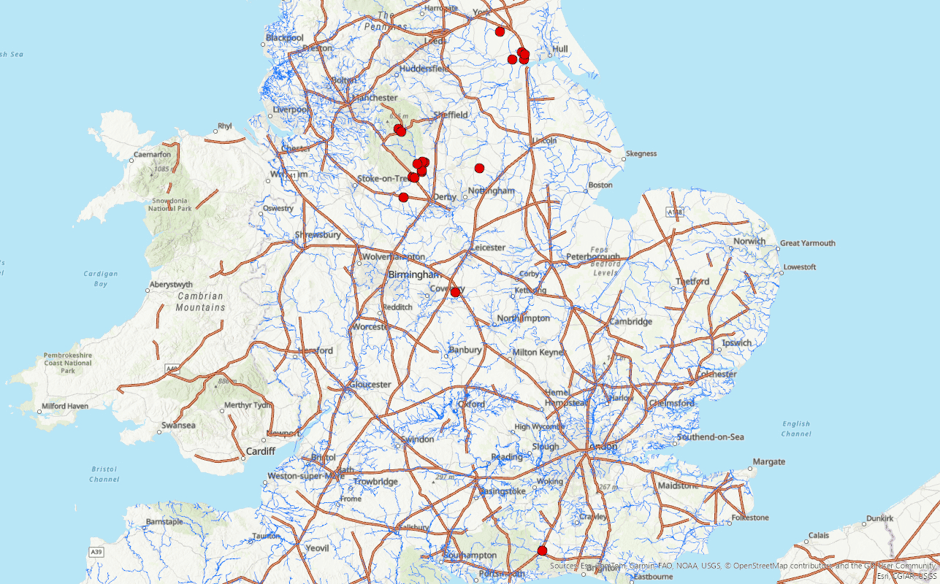
Fig 3 Pigs of Lead in Roman Britain. Location indicated by red dot
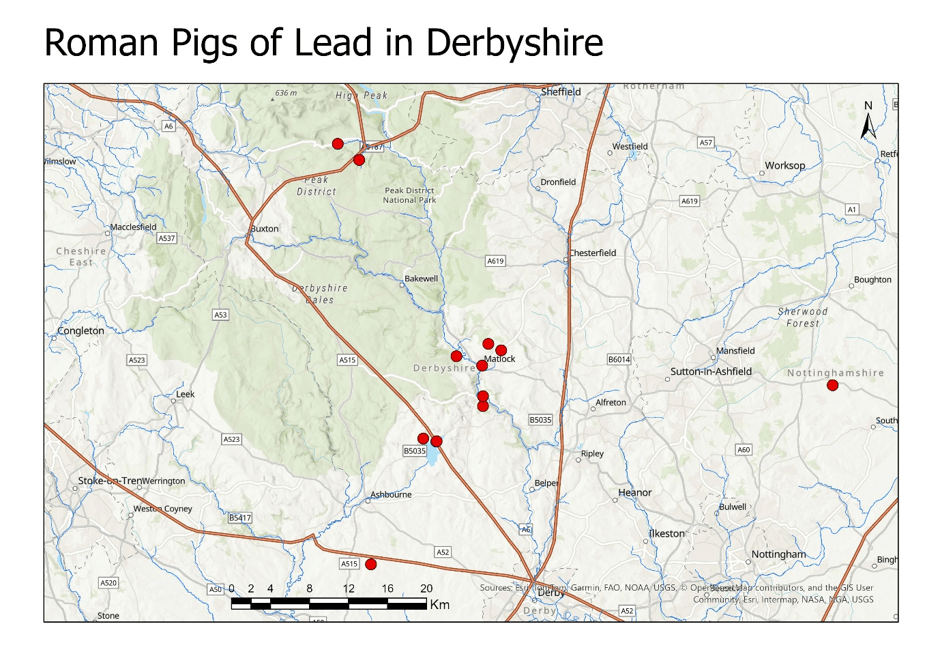
Fig 4 Roman Pigs of Lead in Derbyshire
So, what can we deduce about the location of Lutudarum?
- It must have been a place with activity in the second half of the first century. If there is archaeology it should show 1st century occupation
- It would probably be on a Roman Road
- It continued as a settlement for some time and was important enough to be mentioned in the Ravenna Cosmography
- It may have declined after Hadrian when the management/administration of the lead mining area changed
- It need not have been a mining or smelting site, it may just have been an administrative site
Using these criteria most of the Romano-British sites listed by Lane (see appendix 2) would be ruled out as locations for Lutudarum because the available archaeological evidence shows there was no significant activity on the sites before 150AD. Carsington is not ruled out completely as there is some limited evidence for activity in the late first century. In my opinion that evidence does not support a significant 1st century settlement in that area. The archaeological evidence is summarised in Appendix 1. It is possible that there are other areas around Carsington that have earlier remains but archaeologists had four years to investigate before the reservoir was filled and no other possible sites were identified.
Wirksworth has been touted as a possible site, mainly because it became an administrative site in the Anglo-Saxon period. However, there are very few Roman finds from the area and no evidence of any Roman buildings. The Roman road that runs from Buxton to Little Chester near Derby is thought by some to run through Wirksworth but recent LIDAR analysis by David Ratledge has shown that it does not deviate far from a direct line and runs close to the Scow Brook site south of Carsington then Kirk Ireton. Additionally, recent research into lead pollution in the teeth of local people showed there wasn’t continuity in lead production. After the Roman period lead production did not restart until about 650AD so institutions could not have carried on during that period.
The area covered by Matlock, Matlock Bath and Cromford is similar to Wirksworth – there is a scattering of Roman finds but no evidence of any Roman buildings and there are no known Roman roads in the area. A distribution map of pigs of lead found in the area shows that the pigs of lead were found close to the River Derwent and this could have been used to transport pigs of lead downstream to Little Chester where they were able to join the Roman road network or carry on down the Trent to the Humber estuary. Lane believed that the Derwent could have been navigable for small vessels in the Roman period. The inscribed pigs of lead from this area were all from the earliest phase of lead production so it is possible that Lutudarum is still to be found in this area. My guess is that the most suitable location would be somewhere around Cromford where all the traffic coming from the lead mining area could be monitored.
There is another possibility. Derventio has been accepted as the Roman name of Little Chester but the evidence is a little thin. Perhaps Little Chester, where lead shipments arrived on boats from the mining area, and were sorted for distribution via the Roman Road network or for further river transport to the Humber, is a better candidate for Lutudarum and Derventio is somewhere else, possibly Great Wilne. (This is highly speculative). The timing of the building of Little Chester would fit this scenario. The first Roman fort in the area was Strutt’s Park on the west side of the Derwent on raised ground so has a more commanding position. This was built around 50 AD and was used until around 80 AD. Little Chester, on the East side of the river, has a complex history but the first buildings on the site were wooden buildings, some date to between 80 and 120 AD and some date to the late first or early 2nd century. Although Little Chester is usually described as a fort there is little evidence of military activity in the first phase of occupation and the ramparts seem to be later additions, so perhaps Little Chester was built for some role in the distribution of lead; we know that lead mining in Derbyshire began around 80AD (+ or – 10 yrs)
So far, we have two serious candidates for Lutudarum – Cromford and Little Chester. There is one more – Chesterfield. Chesterfield meets all the criteria for Lutudarum.
- The first sign of Roman activity is the building of the fort during the Flavian dynasty (69 – 96AD)
- The fort is on a Roman road (Ryknield Street)
- The fort was occupied until the middle of the third century
- There hasn’t been enough archaeological investigation to determine if the usage of the fort declined after 150
Chesterfield has been rejected in the past because ‘it is too far from the lead mining district’. But we have seen that the earliest pigs of lead were found in the Matlock area and the distance from Chesterfield to Matlock is only 10 miles (by car on modern roads). It is also worth noting that when the Romans pushed northwards, Brigantia was friendly with Rome and not conquered but they may have allowed lead mining in its territory. The fort at Chesterfield would have been located outside Brigantian territory but close enough to administer lead mining activity. The separation of the mining activity and the administration centre may explain the losses and subsequent rediscovery of Roman pigs of lead experienced in the early phase of lead mining.
We now have three or four viable candidates for Lutudarum and it is unlikely that there will ever be any foolproof evidence of its location. A Roman milestone saying “Lutudarum 2 miles” 2 miles away from a known Roman place would be good evidence but if we haven’t found anything like that and it is unlikely we ever will. Six months ago I favoured Cromford as my preferred location but since then I have re-read relevant papers and secondary sources and concluded that Lutudarum is more likely to be a site with evidence of first century occupation, ie Little Chester or Chesterfield. It would be foolish to bang my fist on the table and say “Lutudarum is Chesterfield” or “Lutudarum is Little Chester”. It is more realistic to assign some probabilities to the different candidates. So, this my estimation of the chances of the different candidates being Lutudarum:
Chesterfield 40%
Little Chester 30%
Cromford 15%
Carsington 10%
Somewhere else 5%
Unfortunately we will probably never know.
Appendix 1 – Archaeological Investigations at Carsington
The Roman finds near Carsington are thought to be evidence for Lutudarum. I disagree but think it is important that all the archaeological evidence is considered, so I have summarised the evidence here.
Lomas J., (1960) A Romano-British Site at Owslow Farm, Carsington. DAJ v080 109-116
An inscribed pig of lead had been found during ploughing in 1946. National Grid Reference 238533, reported by RWP Cockerton in the Derbyshire Archaeological Journal (DAJ) LXX111 (1953) 110. A search in 1959 resulted in a concentration of sherds of coarse Romano-British pottery near to the Brassington/Carsington parish boundary. Pottery fragments date the site to the early 3rd Century. There was probably only one dwelling at the site. Many nodules of lead were found in the excavated trenches but there was no evidence of a smelting site. If there was smelting nearby it would probably happen at the top of the slope where more wind would have created a better draught and higher temperatures; unfortunately, any sites in this area would ha.ve been obliterated by later mining.
Ling R. and Courtney T. (1981) Excavations at Carsington 1979 – 80. DAJ v101 58 – 87
Two sites near the Scow Brook are now under Carsington Reservoir. When site A was being excavated the farmer drew the attention of the archaeologists to another site, about 700m to the south, now called site B. This paper looks at the excavations of site B. This was initially identified as a kiln complex and building by the surface finds. The building was rectangular and divided into rooms. Room A had a partial underfloor heating system. The building may have been built on the site of an earlier structure as tesserae, fragments of tiles and window glass were found within the fabric of the building. The finds on the site as a whole date it from the mid 2nd century to the 4th century. Although surface finds suggested tile production this was not confirmed by excavation, nor was there any evidence of lead working. The underfloor heating system and the presence of box flue tiles suggest the building was for domestic, not industrial purposes.
According to the paper on the excavations of site A (Dearne et al), the building on site B lay within a ditched enclosure which also contained other possible building platforms.
Ling, R., Hunt, C.O., Manning, W.H., Wild, F. and Wild, J. P. () Excavations at Carsington 1983-84. DAJ v110 (1990) 030-055
This paper is about further work on site B. It was designed to check the area around the building discovered in the 1979-80 excavation. It confirms occupation from the 2nd half of the 2nd century to the late 4th century. The possible building platforms, observed during a previous excavation seem to be platforms for outbuildings. The main building was previously dated to the late 3rd and 4th centuries but the outbuildings may be earlier than this. The remains of roof tiles and building blocks found near one of the outbuildings suggests that this was quite substantial but there is no evidence on how it was constructed. To quote directly: “All the evidence points to the 4th century as the period of most intensive occupation.”
There were a few fragments of worn, late first century or early 2nd century samian ware but the excavators think that this may have come from rubbish brought to the site. On the whole the evidence suggests that the building was a farmhouse associated with pastoral activity.
Dearne, M. J., Anderson, S. and Branigan, K. () Excavations at Brough Field, Carsington, 1980. DAJ v115 1995 037-075
This paper is about excavations at site A at Scow Brook, just south of Carsington and now under Carsington Reservoir. Two 4th century pigs of lead were recovered from a pit immediately north of site A in 1983. The pigs are uninscribed and dated from the context in which they were found. (Now in Buxton Museum)
Site A is a five acre site that has been extensively damaged by deep ploughing. The archaeologists excavated the part of the site where fieldwalking had produced high densities of pottery and building material. They mechanically stripped 0.6 acres and manually cleaned this area, known as Brough Field, SK 2452/2552. The area lay to the north-west of Scow Brook.
Phase 1 in the development of the site was a substantial rectangular timber building with ditches taking water away from the building.
Phase 2. By the end of the 2nd century the timber building had been superseded by buildings with stone foundations. Much stone had been removed from the site but there was enough left to infer three stone structures. The buildings seem to be connected to lead working. Pits contained galena (lead ore) and fragments of millstones, probably used for grinding ore.
Phase 3. The building fell into disuse and ditches were dug across the site.
The damage to the site made it difficult to establish a chronology. There were some sherds of pottery from the late 1st century/early 2nd century but overall phase 1 appears to be later. The buildings of phase 2 were constructed between 150 and 200. Only one coin was found, It was from AD139 but very worn so had probably been lost sometime after this date. Strangely, after the dig had completed, around 30 coins were reported as having come from the site. These had been found by fieldwalking and metal detecting. There were two very early coins from 71 BC and 32 BC. This simply demonstrates that Roman coins could remain in circulation for a long time before being deposited. There were five coins from the reign of Domitian, dated to around 90 to 94. Further coins were dated right through until the late 4th century and there were many that were too worn to date accurately. The archaeologists concluded that “An earlier second- or even late first-century origin for the site must be a possibility”.
To be convinced that Carsington is Lutudarum I would want to see more archaeology from the 70s and 80s.
Appendix 2 – Summary of the Romano-British Sites in the Lead Mining Area (from Lane (1986))
Crich. Possible Roman building and several Roman coins found but these were badly corroded. Two that were legible were 3rd century
Starkholmes. Early mine workings thought to be Roman but not possible to confirm the findings.
Darley Dale (Oker Hill). Some evidence of open cast working and lead ore deposits. Some 3rd century coins found and a Roman cremation.
Great Longstone. Brass pins and Roman coins found.
Castleton (Odin Mine). Traditions of Roman lead mining but no evidence. A pig of lead was found near Castleton but the exact location is unknown.
Wirksworth. Became an important lead mining administrative centre in the Saxon era but there is very little evidence of Roman activity. A few finds but no known Roman buildings.
Cromford. Although this would be ideally situated to monitor river traffic coming down the Derwent, there is not much evidence of Roman activity. Two pigs of lead were found in St. Marys churchyard (although some think that the find site may have been St. Mark’s churchyard)
Rainster Rocks (Nr Brassington). Excavated by Lane in 1970. Substantial occupation from around 180 to the mid 5th century, with most activity in the 3rd and 4th centuries. Evidence of lead smelting
The Boroughs, Wetton
Carsington. Three sites – Owslow Farm, Site A (Borough Field) and Site B (see Appendix 1)
Bradwell. A cyst burial found in 1897 could have been Roman. A hoard of 18 Roman coins was found at Hadfield’s Quarry, Pindale. Most have been lost and the one survivor is probably 4th century.
Nether Haddon. A gritstone Roman altar found at Haddon Hall
Eyam. Two Roman cremation urns found in the early 19th century. Maybe 3rd/4th century
Chee Tor. A series of enclosures. Pottery evidence for one of the enclosures gave a construction date of 3rd to 4th century.
Middleton by Wirksworth. Enclosures very close to lead mining activity. Derbyshire ware pottery suggests a Roman date for the lead working.
Smerrill Grange. Rectangular structures with surface finds of 3rd to 4th century Roman pottery
Scarcliffe Park. This has dating evidence earlier than most of the other sites in this list (end of 1st century/beginning of 2nd century) and also has significant evidence of lead smelting
Peakpits Brook, Alderwasley. 2nd to 3rd century pottery and lead slag.
Great Wilne. Large quantities of roofing tiles, box tiles and Roman pottery from late 1st to 4th century. Situated at confluence of the Derwent and the Trent. Possible site of Lutudarum, the etymology of the word meaning muddy water
Appendix 3 – Table of Pigs of lead
Appendix 4 – Sources
Most of the information has come from Lane (1986) The Romans in Derbyshire.
The information about inscriptions on the pigs of lead is from the website, Roman Inscriptions of Britain, https://romaninscriptionsofbritain.org/inscriptions , although some of the pigs listed do not have inscriptions and the information comes from Lane.
The Derbyshire Archaeological Journal has relevant archaeological reports.
Patterson (2016) Roman Derbyshire
Ratledge, D. (2021) Derbyshire Archaeological Journal 141 7-31 (Route of the Buxton to Derby Roman road)


Interesting to read your your blog. Have never heard of a Roman site at Scow Brook, Carsington before, but we did recently visit St Mary’s church, Cromford for the first time to attend a choral concert; it was an interesting church.
LikeLiked by 1 person